首页Home›住Stay
住 · 在深圳住哪儿Stay · Where to Sleep in Shenzhen
在深圳,选区比选酒店重要得多。这座城市东西跨度极大,住错一个区,每天可能多花一小时在路上。这一页帮你先锁定板块,再挑价格带,最后处理证件、押金与长住这些真问题。 In Shenzhen, which district you pick matters far more than which hotel you pick. The city stretches a long way east to west, and the wrong base can cost you an hour of commuting every day. This page helps you choose the district first, the price band second, and then deals with the practical bits: ID registration, deposits, and longer stays.
为什么选区比选酒店重要
在深圳,通勤时间才是房价的一部分
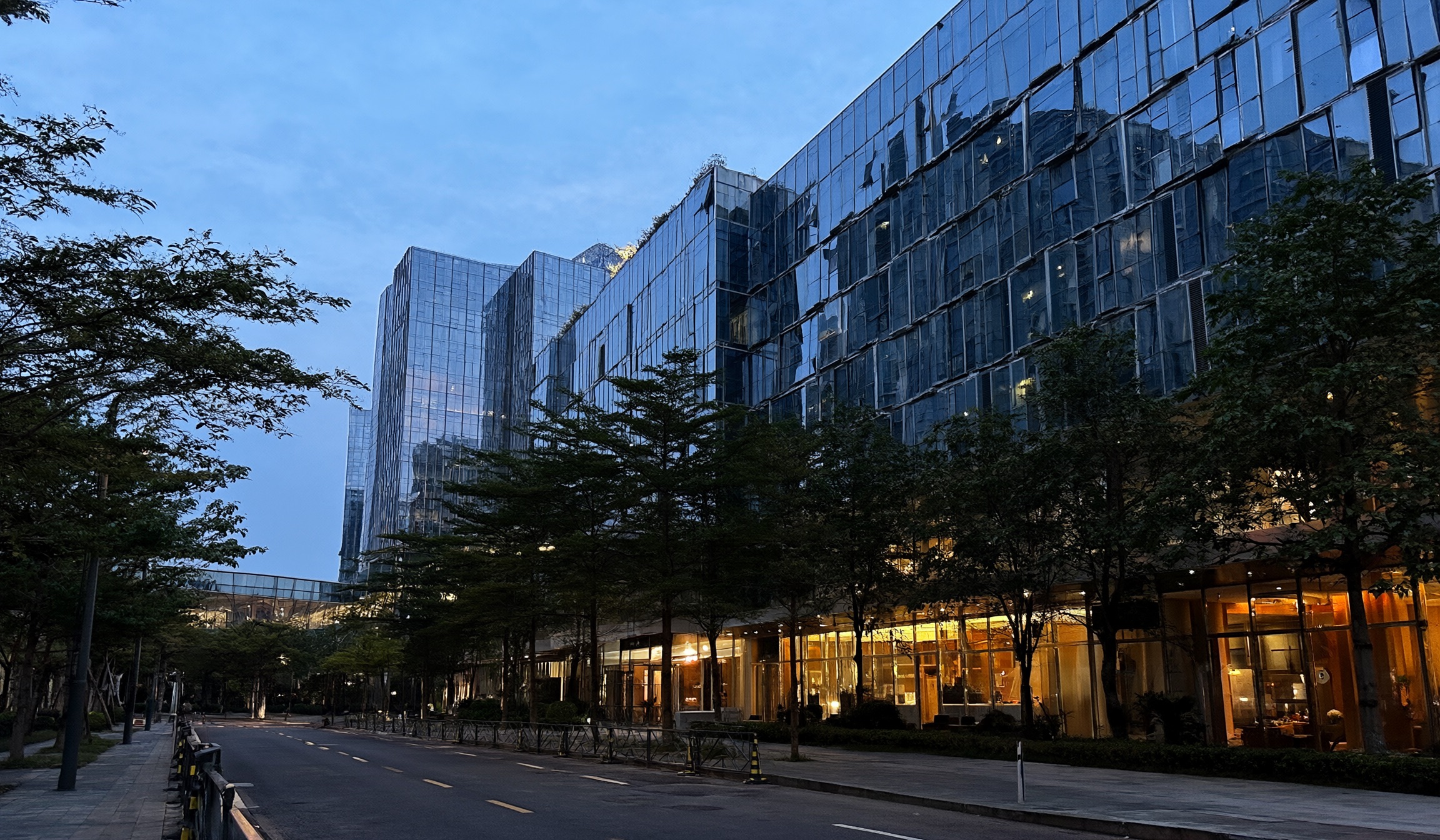
深圳全市面积 1997.47 平方公里,东西狭长,从东边的大鹏半岛到西边的宝安机场,开车横穿常常要两个小时以上。酒店本身大同小异,但同一个价位的房间,放在福田和放在龙华,你每天多付的是时间。所以订房前先问三个问题:
- 你每天要去哪里?如果主要行程在福田会展中心一带,就优先福田、罗湖、皇岗;如果一半时间在南山科技园,福田与后海都合理。
- 你能接受多长的单程?地铁 30 分钟以内是舒适区,45 分钟是需要考虑的长度,一小时以上只适合只来一次的短途客。
- 你需要走路还是打车?深圳的 11 月天气很好,但中午仍可能接近 27 ℃,从地铁口走十分钟到酒店是常态,别只看地图直线距离。
深圳地铁早晚高峰非常拥挤,部分大客流站点进站要排队。如果你住在离会场三站以内的位置,早点出门的容错空间比住得远但房间更好要大得多。
地铁线路、票价与运营时间请见 行 · 交通出行;会场与 APEC 日程背景请见 APEC 2026 专题。
十个住宿板块逐一分析
下面每个板块都写清四件事:适合谁、优点、缺点、到福田会展区的通勤时间。通勤时间按地铁正常时段估算,高峰请自行加 10–20 分钟。
1. 福田中心区(会展中心/购物公园/香蜜湖)
适合谁:以会议和商务为主的代表、第一次来深圳且不想花时间通勤的人。
优点:离会展中心与市民中心最近,地铁 1、2、3、4、11 号线在此密集交汇;晚上散步有中心书城、COCO Park、莲花山公园;打车去南山或罗湖都在半小时内。
缺点:APEC 期间房价最高、房源最紧;部分酒店临主干道,低楼层会有车流声。香蜜湖一带相对安静,但离地铁站步行距离略长。
到会展区通勤:地铁 0–15 分钟,多数可步行。
2. 福田口岸/皇岗
适合谁:需要频繁往返香港的人;住在深圳但当天要过关的商务客。
优点:福田口岸通关时间为 06:30–22:30,接驳地铁 4 号线与 10 号线;重建后的皇岗口岸提供 24 小时旅检通关并在地下接入地铁 7 号线皇岗口岸站,是深港之间唯一 24 小时通关的陆路口岸,采用「合作查验、一次放行」,官方称通关耗时可由 30 分钟压缩至 5 分钟。
缺点:口岸周边业态偏生活化,高端餐饮与夜生活选择少于福田中心区;早晚过关高峰人流集中。
到会展区通勤:地铁约 10–20 分钟。
3. 罗湖(罗湖口岸/人民南/万象城)
适合谁:铁路到达的旅客(深圳站就在罗湖)、想逛老城与购物的人、预算敏感但要求位置方便的人。
优点:深圳站与罗湖口岸(通关 06:30–24:00,接驳地铁 1 号线罗湖站)都在这里;万象城、东门老街、人民南商圈成熟;酒店存量最大,同价位房间通常比福田大。
缺点:城区老,部分酒店楼龄偏大、停车位紧张;东门一带人多嘈杂,不适合怕吵的人。
到会展区通勤:地铁约 20–30 分钟。
4. 南山后海—海岸城
适合谁:行程兼顾科技企业与商务宴请的人;喜欢新城景观、商场与餐厅密度高的住客。
优点:后海是深圳的新 CBD,海岸城、深圳湾万象城、人才公园都在步行范围;地铁 2、11、13 号线覆盖,去机场与去福田都顺。
缺点:去福田会场需要跨区通勤,单程二十分钟以上;写字楼区周末夜晚略冷清。
到会展区通勤:地铁约 20–30 分钟。
5. 深圳湾/科技园
适合谁:拜访科技公司、需要安静办公环境的人;长住客。
优点:深圳湾公园可骑行、可看日落;科技园一带服务式公寓与商务酒店集中,适合住一周以上;地铁 1、2、9、13 号线可达。
缺点:早晚高峰高新园、深大等站点客流量大,进站排队;生活配套以办公楼配套为主,老城烟火气不如罗湖。
到会展区通勤:地铁约 25–35 分钟。
6. 蛇口海上世界
适合谁:把出差当小假期的人、带家属同行的人、喜欢海边与西式餐饮的人。
优点:以明华轮为核心的海滨街区,步行可达滨海步道与女娲滨海公园,傍晚看日落很舒服;蛇口邮轮母港有往返香港、澳门、珠海方向的船班,对跨境行程友好;地铁 2 号线、12 号线可达。
缺点:离福田会场最远的市区板块之一,通勤明显偏长;房价在周末与节假日上浮。
到会展区通勤:地铁约 35–50 分钟。
7. 前海/宝安中心
适合谁:在前海办公或参会的人;需要兼顾机场行程的人。
优点:新城区,酒店新、房间大;欢乐港湾与「湾区之光」摩天轮在宝安中心一带,晚上有得逛;地铁 1、5、11 号线贯通,去机场极快;深中通道通车后到中山可缩至 30 分钟以内。
缺点:除宝安中心外,部分区域生活配套仍在建设,晚上略空;去福田会场要跨区。
到会展区通勤:地铁约 30–45 分钟。
8. 龙华/深圳北站
适合谁:坐高铁来、行程以铁路为轴心的人;预算敏感但要求交通方便的人。
优点:深圳北站是主要高铁枢纽,站内直接换乘地铁 4、5、6 号线;同价位房间比福田大不少;去广州、香港西九龙都方便。
缺点:典型的通勤睡城,晚上可逛的地方有限;早高峰深圳北站进站人流极大,务必留足时间。
到会展区通勤:地铁 4 号线直达约 20–30 分钟。
9. 机场周边(宝安)
适合谁:红眼航班、转机过夜、第二天清早起飞的人。
优点:地铁 11 号线机场站直连市区,机场快线在 GTC 17 号门旁售票上车,覆盖福田、龙岗等 7 个城区;同档次房价明显低于市区。
缺点:除赶飞机外,去任何景点都要先坐 40 分钟以上的车;周边餐饮以快餐为主。
到会展区通勤:地铁 11 号线约 45–60 分钟。
10. 大鹏/南澳(度假)
适合谁:会议结束后留一两天看海的人;喜欢民宿与海岸线的人。
优点:较场尾民宿村、大鹏所城、杨梅坑与桔钓沙海岸线都在这边,是深圳最像度假的地方;2025 年底地铁 8 号线三期通到溪涌站后,从福田坐地铁一个多小时可直达大鹏方向。
缺点:离市区极远,通勤到福田会场不现实;旺季民宿要提前订,公共交通末端仍依赖公交或打车。
到会展区通勤:不建议日通勤,地铁加公交单程 90 分钟以上。
住宿板块对照表
| 板块 | 适合谁 | 代表区域 | 参考价位(元/晚) | 到福田会展区通勤 |
|---|---|---|---|---|
| 福田中心区 | 会议代表、商务客 | 会展中心、购物公园、香蜜湖 | 600–2500 | 地铁 0–15 分钟 |
| 福田口岸/皇岗 | 频繁往返香港 | 福田口岸、皇岗口岸 | 400–1200 | 地铁 10–20 分钟 |
| 罗湖 | 铁路到达、购物、预算敏感 | 罗湖口岸、人民南、万象城 | 300–1200 | 地铁 20–30 分钟 |
| 南山后海—海岸城 | 科技行程、商务宴请 | 后海、海岸城、人才公园 | 500–1800 | 地铁 20–30 分钟 |
| 深圳湾/科技园 | 长住、拜访科技公司 | 科技园、深圳湾公园 | 450–1500 | 地铁 25–35 分钟 |
| 蛇口海上世界 | 带家属、度假心态 | 海上世界、蛇口邮轮母港 | 500–1600 | 地铁 35–50 分钟 |
| 前海/宝安中心 | 前海办公、兼顾机场 | 前海、宝安中心、欢乐港湾 | 450–1500 | 地铁 30–45 分钟 |
| 龙华/深圳北站 | 高铁通勤、预算优先 | 深圳北站、龙华中心 | 300–900 | 地铁 20–30 分钟 |
| 机场周边 | 转机、红眼航班 | 宝安机场、后瑞 | 300–900 | 地铁 45–60 分钟 |
| 大鹏/南澳 | 会后度假 | 较场尾、大鹏所城、南澳 | 400–1500 | 不适用(90 分钟以上) |
酒店类型与价格带
深圳的住宿供给非常分层。下面五档是最常见的区间,方便你快速定位预算。所有数字都是日常平季的参考区间,不是报价。
国际连锁五星
约 900–2500 元/晚
服务标准稳定,前台英语能力较好,能处理境外旅客登记、外币与信用卡预授权。会议室、行政酒廊、健身房齐全,适合正式商务。福田、后海、蛇口最集中。
设计型精品酒店
约 500–1200 元/晚
房间面积通常偏小但设计感强,多集中在南头古城、蛇口、华侨城一带。适合喜欢在地氛围的人,缺点是配套少、隔音偶尔参差。
商务四星
约 400–800 元/晚
性价比最稳的一档:位置多在大型地铁站旁,房间够用,早餐管饱。适合一周以内的出差,是多数会议团的默认选择。
连锁经济酒店
约 200–400 元/晚
标准化程度高、门店密集,多在口岸、地铁沿线与老城区。房间小、无多余设施,但干净可靠。注意部分门店房间不接待境外旅客登记的情况已不再合规,但实际执行仍有差异,订前建议先与前台确认能否为外籍客人办理住宿登记。
公寓式酒店/服务式公寓
约 300–900 元/晚;月租另计
带厨房、洗衣机与独立客厅,按周或按月计价更划算。科技园、后海、前海一带供给最多,是停留一周以上最舒服的选择。
青旅与胶囊
约 80–250 元/床位
集中在罗湖、福田口岸与华侨城。适合独行背包客。注意:个体青旅不一定能为外籍旅客完成住宿登记,正规连锁青旅通常可以,订前要问清。
怎么挑:五步决策
-
先定板块
把你行程里出现次数最多的地方写下来,选离它最近的板块,而不是选最便宜的。
-
再看地铁站距离
深圳地铁是最可靠的出行方式。理想的一条线:酒店步行 8 分钟内有地铁站,且不需要换乘两次以上。
-
确认能否接待境外旅客
外籍护照、港澳台证件都要办理住宿登记。订前用平台的在线客服问一句:「持外国护照能否办理入住登记?」留下书面答复。
-
选可免费取消的房价
会议期间行程常有变化,多付一点换免费取消,通常值得。
-
记下押金与退房时间
入住前问清押金方式(现金还是预授权)、退房时间,以及能否延迟退房。
APEC 会议周的订房策略
- 尽量早订。会议周(2026 年 11 月 17—19 日前后)福田与后海的高星级酒店会最先被订满,提前数月预订能同时拿到房源和价格。
- 只订可免费取消的房型。先占位,行程确定后再决定,比事后抢房便宜得多。
- 避开会场周边的溢价。紧邻会议场馆的酒店在会议周会上浮最明显。沿着地铁往外挪三到五站,价格通常回到合理区间,通勤只多十几分钟。
- 用「地铁 30–45 分钟圈」当筛选条件。把地图缩到整个城市,沿 1、2、4、11 号线看价格曲线,比只看会展中心一圈有效。
- 接受房价波动。同一家酒店在不同日期的价格可能相差很大,周末与展会叠加时更明显。多比几次再下单。
- 留一份纸质确认单。把预订确认、酒店中文地址与电话存成截图或打印件,出租车司机与前台都能用上。
预订渠道与实名登记
订哪里
国内主流渠道(携程、飞猪、美团、去哪儿、同程)房源最全,中文界面价格通常更优;国际渠道(Booking、Agoda、Expedia 等)适合习惯外币结算与英文客服的旅客,但有时房型与价格不完全同步。酒店官网直订在连锁品牌里常有会员价与「含早」套餐。
无论走哪个渠道,最终都要在酒店前台完成实名登记:预订人姓名必须与入住人证件一致。用国际渠道预订时,姓名拼写请与护照完全一致,否则前台可能无法匹配订单。
渠道选择建议
- 会议指定酒店 → 走会务或公司协议渠道,房量与价格最稳。
- 自由行 → 国内平台比价,再回酒店官网核一次含早价。
- 长住 → 直接联系服务式公寓销售,月租比平台日价便宜很多。
- 口岸过渡一晚 → 直接到店问价也可以,但会议周不要赌。
入住须知:证件、登记、押金
根据《中华人民共和国出境入境管理法》第三十九条,外国人在中国境内旅馆住宿的,旅馆应当按旅馆业治安管理的有关规定为其办理住宿登记,并向所在地公安机关报送外国人住宿登记信息;《旅馆业治安管理办法》第六条进一步规定,接待境外旅客住宿的,应当在 24 小时内向当地公安机关报送住宿登记表。
也就是说,「我们酒店没有涉外资质」不是拒绝境外旅客入住的合法理由。公安部、商务部、国家移民管理局已明确,旅馆业不得以无涉外资质为由拒绝接待境外人员。实操上仍有个别门店以「不会录入系统」推脱,如果你遇到这种情况:先请前台联系属地派出所或酒店集团总部;仍无法解决时,可拨打国家移民管理机构 12367 服务平台咨询投诉,或在深圳通过 12345 政务服务热线反映。
反过来也要注意自己的义务:在酒店住宿由酒店负责登记;如果住在朋友家、民宿或其他旅馆以外的住所,需要在入住后 24 小时内由本人或留宿人向居住地公安机关办理住宿登记。这是外国旅客很容易忽略、又确实会被查的一条。
登记需要什么证件
- 外国旅客有效护照 + 有效中国签证或免签入境记录;前台会扫描护照资料页与入境章页并上传系统
- 香港、澳门居民港澳居民来往内地通行证(回乡证);持港澳居民居住证者也可使用
- 台湾居民台湾居民来往大陆通行证(台胞证)或台湾居民居住证
- 内地居民居民身份证;未带身份证时部分酒店可用电子身份证或临时身份证明
- 永久居留外国人永久居留身份证,可直接作为登记证件
- 同住儿童需出示出生证明或户口簿等关系证明,部分酒店会要求登记监护人信息
请随身携带证件原件。复印件、手机照片通常不被接受,且深圳对外籍人士的住宿登记核查比较规范。
押金、退房与房型
- 押金常见为每晚 100–500 元或按房费定额收取,可用现金、微信、支付宝或信用卡预授权
- 预授权境外发行的 Visa/Mastercard 在多数中高端酒店可用,但解冻可能需数个工作日;用微信/支付宝通常当场退还
- 入住时间多数酒店 14:00 后入住,12:00 前退房;可提前寄存行李
- 延迟退房会员或谈一下通常可延到 14:00–18:00,旺季可能加收半天房费
- 加床约 150–400 元/晚,需提前申请;多数四星以上酒店有家庭房或连通房
- 无烟房深圳室内公共场所全面禁烟,酒店无烟楼层普遍存在,订房时备注即可
语言、无障碍与特殊需求
语言
五星级酒店与主要商务酒店前台一般能用英语沟通,四星以下不保证。实用做法:把需求写成简短中文句子给前台看,或用手机翻译。深圳地铁站名有英文标识,指路时直接报站名比描述方向有效。
无障碍房型
国际连锁品牌通常备有无障碍房(加宽门、扶手、淋浴椅),但数量很少,必须提前邮件确认。地铁全线 485 个车站已实现无障碍设施全覆盖,包括盲道、盲文与无障碍垂直电梯,并提供免费「爱心预约」陪同服务;轮椅乘客可在客服热线 0755-88960600 或「深圳地铁」公众号预约全程协助。
亲子
四星以上酒店多可提供婴儿床(免费或少量收费)与儿童洗漱用品。选房时优先考虑带浴缸的家庭房;若白天要去主题乐园,住在华侨城或南山更省时。
清真餐饮
深圳没有大面积的清真住宿区,但中高端酒店通常可提供清真餐或推荐附近清真餐厅。订房时在备注里写明「需要清真早餐」,并注明是否接受素食厨具分开处理。也可用国内外卖与点评平台按「清真」筛选。
素食
深圳素食选择不少,酒店自助餐通常有沙拉、豆制品与蔬菜档口。真正的严格素食者建议直接说「全素,不吃鸡蛋、不吃葱蒜」,并把要求写下来给餐厅经理看。
安全与安静
选房时避开临主干道的低楼层(车流声明显)、电梯机房与设备层同层。订房时可请求「高楼层、不靠街」。深圳城市更新快,周边有工地的情况不少,可以在预订平台的评论里搜「施工」两个字确认近期情况。
停留一周以上:长住怎么安排
住满一周以后,酒店日价的性价比会急剧下降。更划算的做法是转服务式公寓或按月租住,深圳在科技园、后海、前海、宝安中心一带供给充足。
- 服务式公寓:按周或按月报价,通常含每周清洁、宽带与部分水电额度,可直接开正规发票,适合公司出差报销。
- 月租住宅:通过正规中介或长租平台签约。签约后需办理房屋租赁登记备案,多数业务可在「i深圳」App 与社区工作站办理。
- 水电与网络:深圳居民电价、水价按阶梯计价,夏季空调耗电会明显拉高账单。宽带通常由房东协调,办固网需本人证件。
- 外籍租客:可以合法租房,签约时需提供有效护照与签证;入住后记得按前面说的 24 小时规则办理住宿登记。
- 押付方式:常见为「押一付一」或「押二付一」,签合同前确认退租条件与押金退还时间。
深圳的民宿与短租市场发展很快,但合规程度参差。大鹏新区已于 2025 年公开《民宿行业合规经营指引(2025 年版)》,其他区也在陆续规范。对旅客而言,风险主要在三点:一是未取得合法经营资质的房源无法为境外旅客完成住宿登记;二是消防与逃生条件可能不达标;三是临时取消或到店加价难维权。
实操建议:优先选择有营业执照、在平台上有较长时间与较多真实评价的房源;确认能开具发票;下单前用聊天记录确认「能否为外国护照客人办理住宿登记」;到店后核对实际地址与平台信息一致。如果是过境停留或第一次来深圳,酒店仍是更稳的选择。
常见问题
酒店说没有「涉外资质」,不让我入住,怎么办?
先明确一点:根据《出境入境管理法》第三十九条,酒店为外国旅客办理住宿登记是法定义务;三部门也已明确旅馆业不得以无涉外资质为由拒绝接待境外人员。你可以请前台联系属地派出所,或直接拨打国家移民管理机构 12367 服务平台,以及在深圳拨打 12345 反映。订房阶段就先用平台客服确认一次,可以避免大部分麻烦。
住朋友家或短租公寓,也需要登记吗?
需要。外国人在旅馆以外住所住宿的,应当在入住后 24 小时内由本人或留宿人向居住地公安机关办理住宿登记。深圳很多社区支持线上自助申报,也可以到派出所办事窗口、境外人员服务站办理,记得留存《境外人员住宿登记表》。
押金一般多少?退房多久能拿回来?
常见为每晚 100–500 元,或按房费定额。用微信、支付宝支付通常当场原路退回;信用卡预授权解冻可能需要数个工作日,境外发卡行有时更久。退房时主动要一张结算单,方便对账或报销。
APEC 会议周房价会涨多少?还能订到吗?
会议周(2026 年 11 月 17—19 日前后)福田与后海的需求最集中,房价上浮和满房都可能出现,具体幅度每年不同、无法预先给出准确数字。可行的办法是尽早预订可免费取消的房型,并把搜索范围沿地铁 1、2、4、11 号线向外扩三到五站。会议期间官方若有住宿安排指引,以会务通知为准。
带小孩住酒店,加床和婴儿床怎么处理?
加床一般 150–400 元/晚,需提前申请;婴儿床多数四星以上酒店可免费提供,数量有限。深圳地铁对儿童有明确优惠:1.2 米以下或 6 周岁以下免费,1.2–1.5 米或 6–14 周岁半价,需在车站客服中心购买儿童票。带孩子出行优先选带浴缸与家庭房型的酒店。
深圳酒店室内能吸烟吗?
不能。深圳对室内公共场所吸烟有明确禁令并有罚则,酒店客房与走廊都属于禁烟范围,部分酒店设有指定室外吸烟区。预订时选择无烟楼层或备注无烟房即可。
住哪儿看深圳夜景最方便?
福田中心区离市民中心灯光秀最近,莲花山山顶也能俯瞰;后海与人才公园一带适合看湾区夜景;宝安中心的欢乐港湾有「湾区之光」摩天轮。灯光秀并非每晚都有,且在系统检修或重大活动期间可能调整或暂停,出发前请查看官方最新公告。
有没有必要订含早餐的房价?
会议日程紧的话值得,能省下早上找店的时间,也避免空腹赶地铁。深圳早餐选择非常多,如果你喜欢探索本地小店,完全可以只订房,出门吃肠粉或喝早茶。差价值得与否,通常按「一顿早餐是否超过你愿意为省时间付的钱」来判断。
关于本文数字:本文中的房价、押金、加床费等均为平季参考区间,不是任何一家酒店的报价,会随季节、周末与展会大幅波动。APEC 会议周(2026 年 11 月 17—19 日前后)属于典型的需求高峰,实际房价会明显高于本文区间,且高星级酒店可能提前满房。
地铁里程、票价、儿童优惠、无障碍服务等信息来自深圳地铁官网(szmc.net)与深圳市政府门户(sz.gov.cn);酒店住宿登记的法律依据为《中华人民共和国出境入境管理法》第三十九条与《旅馆业治安管理办法》第六条,相关政策口径见中国政府网答复;口岸通关时间与深中通道数据来自深圳市人民政府口岸办公室与深圳政府在线。以上信息会更新,出行前请以官方最新公告为准。
Why the district matters more
In Shenzhen, commuting time is part of the room rate
Shenzhen covers 1,997.47 square kilometres, stretched long from east to west. Driving from the Dapeng Peninsula in the east to Bao'an Airport in the west can easily take over two hours. Hotels are broadly similar; what changes is how much of your day you spend getting to where you need to be. Ask three questions before you book:
- Where do you need to be each day? If your programme centres on the Futian convention area, stay in Futian, Luohu or near Huanggang. If half your time is in Nanshan's tech parks, Futian and Houhai both work.
- How long a one-way trip will you accept? Under 30 minutes by metro is comfortable. 45 minutes is a real cost. Over an hour only makes sense for a one-off short visit.
- Will you walk or take taxis? November weather is lovely, but midday can still reach the high twenties. A ten-minute walk from the metro exit to your hotel is normal — don't judge by straight-line distance on a map.
Rush-hour metro trains in Shenzhen are genuinely crowded, and security screening can mean queues at the busiest stations. Being three stops from your venue with a better buffer beats a nicer room an hour away.
For metro lines, fares and hours see Getting Around; for the meeting itself see APEC 2026.
Ten districts, one by one
Each entry covers who it suits, the upside, the downside, and the commute to the Futian convention area. Commute times assume normal metro service — add 10–20 minutes at peak.
1. Futian CBD (Convention & Exhibition Center / Shopping Park / Xiangmihu)
Who it suits: delegates and business travellers whose programme is here; first-timers who don't want to spend time commuting.
Upside: Closest to the convention centre and Civic Center, with metro lines 1, 2, 3, 4 and 11 converging. Evenings are easy — Central Book City, COCO Park, Lianhuashan Park. Nanshan and Luohu are within half an hour by taxi.
Downside: Highest rates and tightest availability during APEC week. Some hotels front major roads, so low floors pick up traffic noise. Xiangmihu is quieter but a slightly longer walk to the metro.
Commute to the venue: 0–15 minutes by metro; many hotels are walkable.
2. Futian Checkpoint / Huanggang
Who it suits: anyone crossing to Hong Kong often, or doing a same-day border run.
Upside: Futian Checkpoint is open 06:30–22:30 and connects to metro lines 4 and 10. The rebuilt Huanggang Port opened on 12 October 2026 with 24-hour passenger clearance and a direct link to metro line 7 at Huanggang Port station. It is the only land crossing between Shenzhen and Hong Kong open around the clock, and uses a joint "cooperative inspection, single release" model that officials say cuts clearance from about 30 minutes to five.
Downside: The area is functional rather than glamorous — far fewer high-end restaurants and bars than Futian CBD. Border peaks are busy.
Commute to the venue: about 10–20 minutes by metro.
3. Luohu (Luohu Checkpoint / Renmin South / MixC)
Who it suits: arrivals by rail (Shenzhen Railway Station is here), shoppers, and anyone who wants a convenient location at a lower price.
Upside: Both Shenzhen Railway Station and Luohu Checkpoint (06:30–24:00, metro line 1 at Luohu) are here. MixC, Dongmen and the Renmin South retail district are mature, and the hotel stock is the largest in the city — rooms at a given price are usually bigger than in Futian.
Downside: Older urban fabric; some hotels are dated and parking is tight. Dongmen is loud and crowded — not for light sleepers.
Commute to the venue: about 20–30 minutes by metro.
4. Nanshan Houhai–Coastal City
Who it suits: visitors combining tech-company visits with business dinners; anyone who likes new-city skyline, malls and restaurant density.
Upside: Houhai is Shenzhen's new CBD. Coastal City, Shenzhen Bay MixC and Talent Park are all walkable; metro lines 2, 11 and 13 serve the area, so the airport and Futian are both straightforward.
Downside: You will cross the city to reach the Futian venue — 20 minutes plus. Office districts go quiet on weekend nights.
Commute to the venue: about 20–30 minutes by metro.
5. Shenzhen Bay / Science Park
Who it suits: people visiting tech firms, anyone who wants a quiet place to work, and longer stays.
Upside: Shenzhen Bay Park is good for cycling and sunsets. The Science Park area has plenty of serviced apartments and business hotels, which works well for stays over a week. Metro lines 1, 2, 9 and 13 reach it.
Downside: Stations such as Hi-Tech Park and Shenzhen University are among the busiest at peak, with queues at the gates. Food and nightlife are office-district style rather than old-city street life.
Commute to the venue: about 25–35 minutes by metro.
6. Shekou Sea World
Who it suits: travellers treating a work trip as a small holiday, families, and anyone who likes the sea and Western food.
Upside: A waterfront district built around the retired cruise ship Minghua, with coastal promenades and Nüwa Coastal Park within walking distance — excellent at sunset. Shekou Cruise Homeport runs ferries to Hong Kong, Macao and Zhuhai, which suits cross-border itineraries. Metro lines 2 and 12 serve it.
Downside: One of the furthest urban districts from the Futian venue; rates rise at weekends and holidays.
Commute to the venue: about 35–50 minutes by metro.
7. Qianhai / Bao'an Centre
Who it suits: anyone working or meeting in Qianhai, and travellers who also need the airport.
Upside: New city, new hotels, larger rooms. OCT Harbour and the Bay Glory ferris wheel are around Bao'an Centre for evenings. Metro lines 1, 5 and 11 run through, and the airport is quick. Since the Shenzhen–Zhongshan Link opened, Zhongshan is under 30 minutes away.
Downside: Outside Bao'an Centre, some areas are still filling in and feel empty at night; you cross the city to reach the Futian venue.
Commute to the venue: about 30–45 minutes by metro.
8. Longhua / Shenzhen North
Who it suits: rail arrivals whose plans revolve around high-speed trains, and budget-conscious travellers who still want good connections.
Upside: Shenzhen North is the main high-speed rail hub, with direct interchange to metro lines 4, 5 and 6. Rooms at a given price are noticeably larger than in Futian, and Guangzhou and Hong Kong West Kowloon are easy.
Downside: A classic commuter district — limited evening options. Shenzhen North gets extremely busy at peak, so allow extra time at the gates.
Commute to the venue: 20–30 minutes on metro line 4, direct.
9. Around the airport (Bao'an)
Who it suits: red-eye flights, overnight connections, early departures.
Upside: Metro line 11 links the airport station directly to the city, and airport express coaches sell tickets and depart beside Gate 17 of the Ground Transportation Centre, serving seven districts including Futian and Longgang. Rates are clearly lower than downtown.
Downside: Unless you are flying, everything requires a 40-minute-plus ride first. Dining is mostly fast food.
Commute to the venue: about 45–60 minutes on metro line 11.
10. Dapeng / Nan'ao (holiday)
Who it suits: anyone adding a day or two of coast after the meeting; guesthouse and coastline lovers.
Upside: Jiaochangwei's guesthouse village, Dapeng Fortress, Yangmeikeng and Judiaosha are all here — the closest Shenzhen gets to a proper holiday coast. Since metro line 8's third phase reached Xichong at the end of 2025, you can ride from Futian in a little over an hour towards Dapeng.
Downside: Far from everything; commuting to the Futian venue is not realistic. Book guesthouses early in high season, and expect to finish the last leg by bus or taxi.
Commute to the venue: not advised — 90 minutes plus by metro and bus.
District comparison
| District | Who it suits | Representative area | Indicative rate (RMB/night) | Commute to Futian venue |
|---|---|---|---|---|
| Futian CBD | Delegates, business travellers | Convention Center, Shopping Park, Xiangmihu | 600–2,500 | 0–15 min by metro |
| Futian Checkpoint / Huanggang | Frequent Hong Kong trips | Futian Checkpoint, Huanggang Port | 400–1,200 | 10–20 min by metro |
| Luohu | Rail arrivals, shoppers, value seekers | Luohu Checkpoint, Renmin South, MixC | 300–1,200 | 20–30 min by metro |
| Nanshan Houhai–Coastal City | Tech visits, business dinners | Houhai, Coastal City, Talent Park | 500–1,800 | 20–30 min by metro |
| Shenzhen Bay / Science Park | Longer stays, tech visits | Science Park, Shenzhen Bay Park | 450–1,500 | 25–35 min by metro |
| Shekou Sea World | Families, holiday mood | Sea World, Shekou Cruise Homeport | 500–1,600 | 35–50 min by metro |
| Qianhai / Bao'an Centre | Qianhai work, airport access | Qianhai, Bao'an Centre, OCT Harbour | 450–1,500 | 30–45 min by metro |
| Longhua / Shenzhen North | High-speed rail, budget first | Shenzhen North, Longhua Centre | 300–900 | 20–30 min by metro |
| Around the airport | Connections, red-eye flights | Bao'an Airport, Hourui | 300–900 | 45–60 min by metro |
| Dapeng / Nan'ao | Post-meeting holiday | Jiaochangwei, Dapeng Fortress, Nan'ao | 400–1,500 | Not applicable (90 min plus) |
Hotel types and price bands
Shenzhen's accommodation is strongly stratified. These five bands are the usual ones. All figures are indicative shoulder-season ranges, not quotations.
International five-star
about RMB 900–2,500 per night
Consistent service, front desks with workable English, and staff who can handle foreign-guest registration, foreign currency and card pre-authorisation. Meeting rooms, executive lounges and gyms included. Concentrated in Futian, Houhai and Shekou.
Design and boutique
about RMB 500–1,200 per night
Usually smaller rooms with stronger design, clustered around Nantou Ancient Town, Shekou and OCT. Great for travellers who want neighbourhood atmosphere; the trade-offs are fewer facilities and occasionally uneven soundproofing.
Business four-star
about RMB 400–800 per night
The most reliable value band: usually beside a major metro station, adequate rooms, a filling breakfast. Ideal for trips up to a week and the default for most conference groups.
Economy chains
about RMB 200–400 per night
Highly standardised with dense coverage, mostly at checkpoints, along metro lines and in older districts. Small rooms, no frills, but clean and dependable. Note that while refusing foreign guests is no longer lawful, practice still varies by branch — confirm with the front desk before booking.
Apartment hotels / serviced apartments
about RMB 300–900 per night; monthly rates separate
Kitchen, washing machine and a separate living room; weekly and monthly pricing is much better value. Supply is thickest in Science Park, Houhai and Qianhai — the most comfortable option for stays over a week.
Hostels and capsules
about RMB 80–250 per bed
Mainly in Luohu, around Futian Checkpoint and in OCT. Good for solo backpackers. One caveat: independent hostels cannot always complete the registration foreign guests need. Reputable chain hostels generally can — ask first.
How to choose: five steps
-
Pick the district first
List the places that appear most often in your programme and choose the district nearest them — not the cheapest option.
-
Then check the metro
The metro is Shenzhen's most dependable way to travel. Aim for a station within an eight-minute walk and no more than one change.
-
Confirm foreign-guest registration
Foreign passports, and Hong Kong, Macao and Taiwan travel permits, all require registration. Ask the booking platform's chat: "Can you register a guest holding a foreign passport?" and keep the written reply.
-
Book a free-cancellation rate
Plans change during a meeting week. Paying a little more for free cancellation is usually worth it.
-
Note the deposit and checkout time
Ask how the deposit is taken (cash or card pre-authorisation), when checkout is, and whether late checkout is possible.
Booking strategy for APEC week
- Book early. Around 17–19 November 2026, Futian and Houhai fill first. Booking months ahead secures both the room and the rate.
- Take free-cancellation rates only. Hold a room now and decide later; it is much cheaper than scrambling at the last minute.
- Step away from the venue premium. Hotels immediately around the meeting venue see the steepest increases. Move three to five metro stops out and prices usually normalise for ten extra minutes of travel.
- Filter by the "30–45 minute metro ring". Zoom out to the whole city and follow lines 1, 2, 4 and 11 along the price curve rather than staring at the convention centre.
- Expect rate volatility. The same hotel can differ sharply by date, especially when a weekend meets an exhibition. Compare more than once before you commit.
- Keep a paper confirmation. Save the booking confirmation, the hotel's Chinese address and its phone number as a screenshot or printout — useful for taxi drivers and front desks alike.
Booking channels and real-name registration
Where to book
Chinese platforms (Ctrip, Fliggy, Meituan, Qunar, Tongcheng) have the widest inventory and often the better price in RMB. International platforms (Booking, Agoda, Expedia and similar) suit travellers who prefer foreign-currency billing and English support, though room types and rates are not always fully in sync. For chain brands, booking direct often unlocks member rates and breakfast packages.
Whichever channel you use, the front desk still completes real-name registration on arrival: the booking name must match the identity document presented. When booking internationally, spell your name exactly as it appears in your passport or the desk may not be able to match the reservation.
Channel by situation
- Official conference hotels → use the conference or corporate channel; best availability and rate.
- Independent travel → compare on Chinese platforms, then check the breakfast-inclusive rate on the hotel's own site.
- Long stays → contact the serviced apartment's sales team directly; monthly rates beat nightly ones substantially.
- One night near a checkpoint → walk-in is possible, but do not gamble during APEC week.
Check-in essentials: documents, registration, deposits
Under Article 39 of the Exit and Entry Administration Law of the People's Republic of China, where a foreign national stays at a hotel in China, the hotel must complete the accommodation registration in accordance with public-security regulations for the hotel industry and report the guest's registration information to the local public security authority. Article 6 of the Regulations on Public Security Administration of the Hotel Industry further requires hotels hosting overseas guests to submit the registration form to the local public security authority within 24 hours.
In other words, "we don't have the licence to host foreigners" is not a lawful reason to turn a foreign guest away. The Ministry of Public Security, the Ministry of Commerce and the National Immigration Administration have stated that hotels may not refuse overseas visitors on those grounds. In practice, a few branches still plead that they cannot operate the system. If that happens: ask the desk to call the local police station or the group head office. If it is still unresolved, call the National Immigration Administration's 12367 service platform, or 12345, Shenzhen's government service hotline.
Know your own obligation too. In a hotel, the hotel handles registration. If you stay with friends, in a guesthouse, or anywhere other than a hotel, you or your host must register your accommodation with the local public security authority within 24 hours of moving in. This is the rule foreign visitors most often miss — and it is enforced.
Documents accepted at check-in
- Foreign nationalsValid passport plus a valid Chinese visa or a visa-free entry record; the desk scans the data page and entry stamp and uploads them
- Hong Kong / Macao residentsMainland Travel Permit for Hong Kong and Macao Residents (Home Return Permit); the Residence Permit for Hong Kong and Macao Residents also works
- Taiwan residentsMainland Travel Permit for Taiwan Residents, or the Residence Permit for Taiwan Residents
- Mainland ChineseResident identity card; some hotels accept the electronic ID or a temporary identity certificate
- Permanent residenceForeign Permanent Resident ID Card, accepted as a registration document
- Children sharing a roomA birth certificate or household register may be requested; some hotels record the guardian's details
Carry originals. Photocopies and phone photos are usually not accepted, and registration checks in Shenzhen are consistently applied.
Deposits, checkout and room types
- DepositCommonly RMB 100–500 per night or a flat amount, by cash, WeChat Pay, Alipay or card pre-authorisation
- Pre-authorisationForeign-issued Visa and Mastercard work at most mid-range and upscale hotels, but release can take several working days; WeChat Pay and Alipay are refunded immediately
- Check-in / outMost hotels check in after 14:00 and out by 12:00; luggage storage before and after is standard
- Late checkoutOften stretched to 14:00–18:00 for members or on request; peak dates may charge half a night
- Extra bedAbout RMB 150–400 per night and must be requested in advance; most four-star and above hotels have family or connecting rooms
- Non-smokingIndoor public places in Shenzhen are smoke-free, and non-smoking floors are standard — just note it when booking
Language, accessibility and special requests
Language
Front desks at five-star and major business hotels generally work in English; below four stars it is not guaranteed. A practical habit: write your request as a short Chinese sentence and show it, or use a translation app. Metro station names are signposted in English, so naming the station is more reliable than describing a direction.
Accessible rooms
International chains usually keep a small number of accessible rooms (wider doors, grab rails, shower chairs) that must be confirmed by email in advance. All 485 metro stations in Shenzhen have full accessibility coverage including tactile paving, braille and step-free lifts, plus a free staff-escort booking service. Wheelchair users can arrange door-to-door assistance on 0755-88960600 or through the Shenzhen Metro WeChat account.
Families
Most four-star and above hotels provide cots (free or for a small fee) and children's amenities. Choose a family room with a bathtub. If your days are theme-park days, staying in OCT or Nanshan saves a lot of travel. On the metro, children under 1.2 m or under six ride free, and those 1.2–1.5 m or aged 6–14 pay half — buy the child ticket at the station service centre.
Halal
Shenzhen has no large halal hotel district, but mid-range and upscale hotels can usually arrange halal meals or point you to nearby halal restaurants. Put "halal breakfast required" in the booking notes, and state whether you need separate vegetarian cookware. Delivery and review apps let you filter by "halal" in Chinese.
Vegetarian
Vegetarian food is easy to find, and hotel buffets almost always have salads, tofu and vegetable stations. Strict vegetarians should say clearly: "fully vegetarian — no egg, no onion or garlic", and put it in writing for the restaurant manager.
Quiet and safety
Avoid low floors on major roads, and rooms on the same floor as lift machinery or plant rooms. Ask for "high floor, away from the street" when booking. Urban renewal is constant in Shenzhen, so construction nearby is common — search the booking reviews for the word for construction to check recent conditions.
Staying a week or more
Beyond a week, nightly hotel rates stop making sense. Serviced apartments or monthly rentals are far better value, and Shenzhen has plenty in Science Park, Houhai, Qianhai and Bao'an Centre.
- Serviced apartments: quoted weekly or monthly, usually including weekly cleaning, broadband and an allowance for utilities, with proper fapiao (official invoices) for company expenses.
- Monthly residential leases: sign through a licensed agency or long-lease platform. After signing, the lease must be registered and filed — most of this can be done through the iShenzhen app or the community service station.
- Utilities and internet: electricity and water are tier-priced, so summer air-conditioning pushes bills up. Broadband is normally arranged by the landlord; a fixed line needs your own ID.
- Foreign tenants: renting is entirely legal. Bring a valid passport and visa to sign, and remember the 24-hour accommodation registration rule once you move in.
- Payment terms: one month's deposit plus one month's rent is common; two months' deposit also happens. Confirm exit conditions and the deposit refund timeline before signing.
Shenzhen's guesthouse and short-let market has grown fast but compliance varies. Dapeng New Area published a Compliance Guide for the Guesthouse Industry (2025 edition) in July 2025, and other districts are following. For guests the risks are threefold: an unlicensed property cannot complete the accommodation registration foreign guests require; fire and evacuation standards may be inadequate; and last-minute cancellations or on-arrival price changes are hard to contest.
Practical advice: prefer listings with a business licence and a long history of genuine reviews; confirm an official invoice is available; before booking, get written confirmation in the platform chat that the property can register a foreign-passport guest; and check on arrival that the address matches the listing. For a transit stop or a first visit to Shenzhen, a hotel remains the safer choice.
Frequently asked questions
A hotel says it has no "licence for foreign guests" and refuses me. What now?
Start from the legal position: Article 39 of the Exit and Entry Administration Law makes registering foreign guests a hotel's duty, and three government departments have confirmed that hotels may not refuse overseas visitors for lacking an "overseas-related licence". Ask the desk to call the local police station, call the National Immigration Administration's 12367 platform, or call Shenzhen's 12345 hotline. Confirming with the booking platform's chat before you reserve prevents most of this.
I'm staying with a friend or in a short-let apartment. Do I still need to register?
Yes. Where a foreign national stays somewhere other than a hotel, they or their host must register the accommodation with the local public security authority within 24 hours of moving in. Many Shenzhen communities support online self-declaration, and you can also use a police service window or a service station for foreign residents. Keep a copy of the Registration Form for Accommodation of Overseas Visitors.
How big is the deposit, and how long until it comes back?
Typically RMB 100–500 per night or a flat amount. WeChat Pay and Alipay refunds are usually returned immediately; card pre-authorisations can take several working days, sometimes longer with foreign issuing banks. Ask for a settlement slip at checkout so you can reconcile or claim expenses.
How much will rates rise during APEC week, and will rooms still be available?
Around 17–19 November 2026, demand concentrates in Futian and Houhai, so both higher rates and sold-out dates are likely. The size of the increase varies year to year and cannot be stated precisely in advance. The workable approach is to book a free-cancellation rate early and widen your search three to five metro stops out along lines 1, 2, 4 and 11. If the organisers publish accommodation guidance, follow that instead.
Travelling with children — how do extra beds and cots work?
Extra beds run about RMB 150–400 per night and need advance notice; most four-star and above hotels provide cots free of charge in limited numbers. On the metro, children under 1.2 m or under six travel free, and those 1.2–1.5 m or aged 6–14 pay half price, with tickets bought at the station service centre. Choose hotels with a bathtub and family room types when travelling with kids.
Can I smoke indoors in a Shenzhen hotel?
No. Shenzhen bans smoking in indoor public places, with penalties attached, and hotel guest rooms and corridors count as indoor public places. Some hotels designate outdoor smoking areas. Simply request a non-smoking room or floor when you book.
Where should I stay to see the Shenzhen night skyline?
Futian CBD is closest to the Civic Center light show, and the top of Lianhuashan Park also overlooks it. Houhai and Talent Park are good for bay-side night views, and OCT Harbour in Bao'an Centre has the Bay Glory ferris wheel. The light show does not run every night and may be adjusted or suspended during system maintenance or major events — check the official notice before you go.
Is a breakfast-inclusive rate worth it?
If your days are tightly scheduled, yes — it saves the morning search and means you are not hunting for food before a crowded metro ride. Shenzhen's breakfast scene is excellent, though, so if you enjoy exploring local spots, book room-only and go out for rice-noodle rolls or morning tea. The honest test is whether the price difference is less than what you would pay to save that time.
About these figures: all room rates, deposits and extra-bed charges here are indicative shoulder-season ranges, not quotations from any hotel, and they move substantially with season, weekends and trade fairs. APEC meeting week (around 17–19 November 2026) is a clear demand peak: expect rates well above these ranges and possible sell-outs at upscale properties.
Metro mileage, fares, child discounts and accessibility details come from Shenzhen Metro (szmc.net) and the Shenzhen government portal (sz.gov.cn). The legal basis for accommodation registration is Article 39 of the Exit and Entry Administration Law and Article 6 of the Regulations on Public Security Administration of the Hotel Industry, with the policy position set out in the Chinese government portal's response. Border-crossing hours and Shenzhen–Zhongshan Link data come from the Shenzhen Port Office and Shenzhen government online. All of this changes over time — confirm with official announcements before you travel.