首页Home›城市概览The City
深圳是什么:一座把「变化」当日常的城市What Shenzhen is: a city that treats change as ordinary
1979 年建市,1980 年成为经济特区。四十多年里,它从一个人口以万计的边陲小镇,长成常住人口超过 1800 万、经济总量接近 3.9 万亿元的超大城市。这一页讲清楚它在哪里、是谁在住、靠什么吃饭,以及为什么 APEC 会把领导人会议放在这里。Founded as a city in 1979 and designated a special economic zone in 1980, Shenzhen has grown in four decades from a small border town into a metropolis of over 18 million people with an economy approaching 3.9 trillion yuan. This page covers where it is, who lives here, what it does for a living, and why APEC is holding its leaders' meeting here.
关键数据
以下为深圳市统计局《2025 年国民经济和社会发展统计公报》口径的 2025 年数据(初步统计数)。
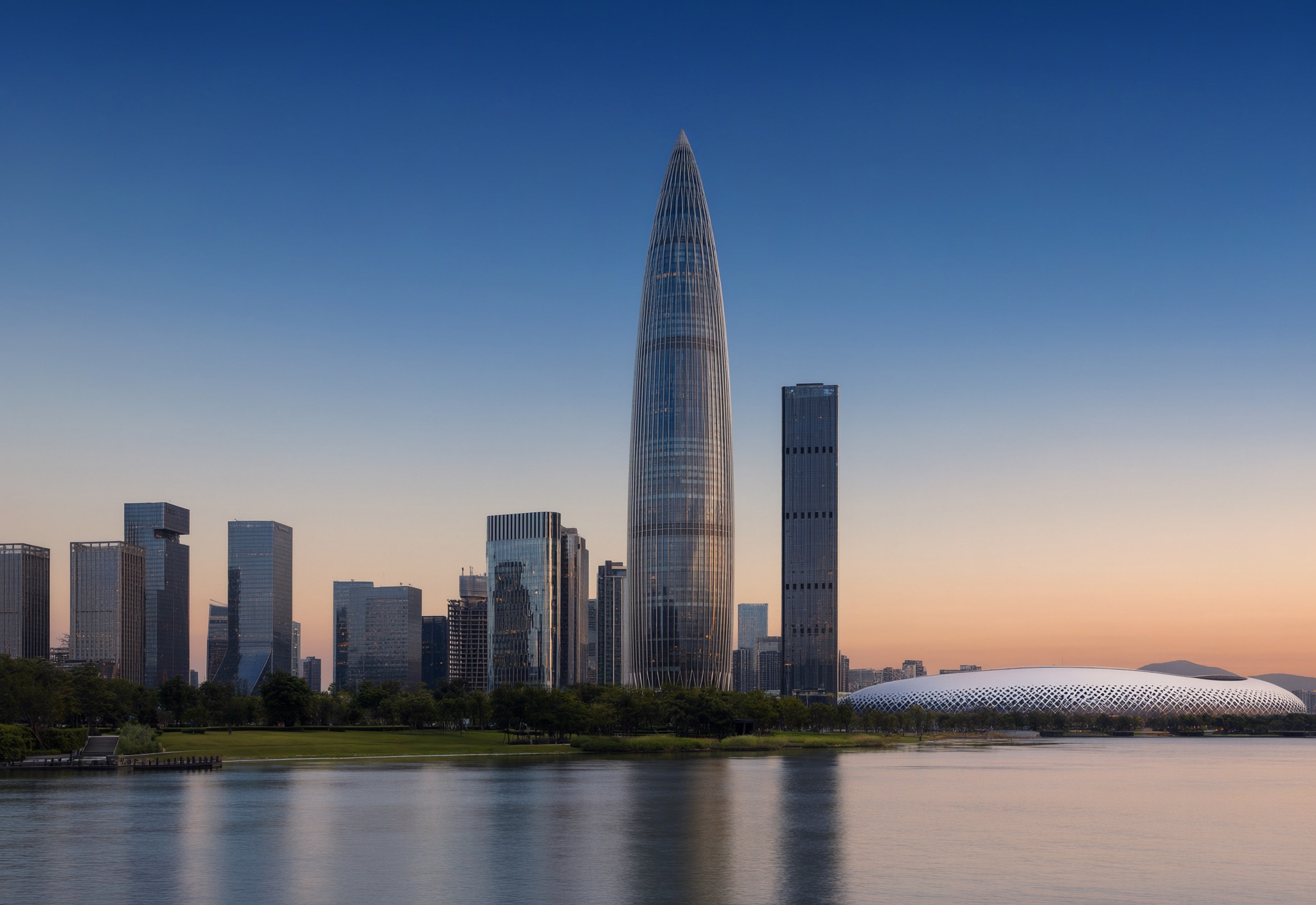
一分钟理解深圳
它是什么,不是什么
深圳是广东省的一座副省级市、计划单列市,位于珠江口东岸,南面与香港特别行政区隔深圳河相望。它不是一个有几百年府城历史的老城,也不是单纯的工业区,而是中国改革开放后被「设计」出来、又在市场里野蛮生长出来的城市样本。
它的历史线索非常短,但每十年都在换一次身份:1979 年建市时是宝安县的行政区域,1980 年成为经济特区,1980 年代靠「三来一补」加工业起家,1990 年代转向电子制造与外向型经济,2000 年代开始出现本土科技企业,2010 年代成为全球硬件创新中心,2020 年代则在电子信息、新能源汽车、无人机、医疗器械和金融上同时发力。
对来访者来说,理解深圳最快的方式是理解它的三个底色:它是移民城市(绝大多数人是外来者,普通话是通用语);它很年轻(人口结构比多数中国大城市年轻得多,城市建筑与产业都在剧烈更新);它靠山海与口岸活着(有海、有山、有密集的陆路口岸,与香港构成一个事实上的双城生活圈)。
地理:一河之隔与一座跨海通道
深圳位于广东省南部、珠江口东岸,东临大亚湾与大鹏湾,西接珠江口与伶仃洋,南以深圳河与香港为界,北与东莞、惠州相连。全市陆域面积约 1997 平方公里,海岸线约 260 公里,海域面积超过 1100 平方公里。地形是典型的「山—海—城」格局:梧桐山、塘朗山、羊台山等山体嵌入城区,大鹏半岛向东南伸入海中,深圳湾、前海湾和大鹏湾构成主要的水岸空间。
两个地理事实决定了深圳的性格。第一是深港之间的陆路口岸:深圳有 16 个口岸,2025 年出入境人员超过 2.73 亿人次,约占全国口岸通关量的四成(据深圳市口岸办与深圳市政府公开介绍)。福田、皇岗、深圳湾、莲塘、蛇口等口岸让「住在深圳、通勤香港」成为日常。第二是深中通道:2024 年 6 月 30 日通车的跨海集群工程,集桥、岛、隧、水下互通于一体,全长约 24 公里,设计时速 100 公里、双向 8 车道,把深圳到中山的车程从约 2 小时缩短到约 30 分钟,让「深莞惠」与「珠中江」两大城市群跨海直连。
人口与气质:来了就是深圳人
2025 年末,深圳常住人口 1824.85 万人,其中城镇常住人口占 99.79%。深圳的户籍人口只占常住人口的一部分,绝大多数居民来自全国各地——湖南、湖北、四川、江西、河南、广西、广东其他城市,是深圳人口的主要来源地。这也解释了深圳最著名的一句话:「来了就是深圳人。」
这句话不只是口号,它对应着实际的城市体验:深圳的通用语言是普通话,而不是粤语;街头餐馆里,湘菜和川菜的数量不输给粤菜;公共服务的规则化程度高、办事流程相对简单;外地人不会因为是外地人而在日常交往中被区别对待。与此同时,粤语在老罗湖、老宝安一带仍然通行,客家话在龙岗、坪山、大鹏、龙华的本地家庭中保留,盐田、大鹏的老居民也说本地的方言。
年龄结构是深圳的另一张名片。人口普查数据曾显示深圳常住人口的平均年龄约为 32.5 岁(2020 年前后的公开报道口径),远比全国平均年轻。年轻人多、流动人口多,直接塑造了这座城市的节奏:工作日晚上 9 点地铁仍然拥挤,凌晨的外卖和宵夜生意兴隆,周末的登山径和海边栈道永远有人。
行政区速览
深圳下辖 9 个行政区和 1 个新区:福田、罗湖、盐田、南山、宝安、龙岗、龙华、坪山、光明,以及大鹏新区。此外还有位于汕尾市的深汕特别合作区(2018 年 12 月揭牌)。每个区在深圳的城市分工都很清楚。
| 行政区 | 一句话定位 |
|---|---|
| 福田区 | 城市中心与金融、会展、政务服务核心区,市政府所在地 |
| 罗湖区 | 深圳最早建成的城区,老商业中心与东门、人民南一带,通香港最便利 |
| 南山区 | 科技创新与高等教育高地,深圳湾、科技园、蛇口、华侨城都在这里 |
| 盐田区 | 东部滨海门户,盐田港与大小梅沙海滨 |
| 宝安区 | 西部制造业与临空经济重镇,深圳宝安国际机场与沙井、新安一带 |
| 龙岗区 | 东部产业大区,客家文化积淀深厚,大运片区与产业园区集中 |
| 龙华区 | 中部交通枢纽与先进制造基地,深圳北站所在地 |
| 坪山区 | 东部先进制造业与生物医药新城,客家围屋文化保存较好 |
| 光明区 | 科学城与北部中心,乳鸽、烧鹅等本地风味闻名 |
| 大鹏新区 | 生态与海洋功能区,大鹏所城、南澳海岸与户外资源集中 |
1979 → 2026:一条时间线
- 1979.03国务院批复同意将宝安县改设为深圳市,以宝安县行政区域为深圳市行政区域,深圳市正式成立。
- 1979.07蛇口工业区破土动工,中国改革开放的「第一炮」在蛇口响起,成为深圳早期工业化的起点。
- 1980.08深圳经济特区正式设立,深圳成为中国改革开放的「试验田」。
- 1980 年代以「三来一补」加工业起家,大量外资与内地劳动力涌入,城市人口开始爆炸式增长。
- 1990 年代转向电子制造与外向型经济,「深圳加工」走向全球市场,深圳证券交易所于 1990 年底开始运作。
- 2010.07经济特区范围扩大到深圳全市,宝安、龙岗纳入特区,城市进入全域一体化发展阶段。
- 2018.12深汕特别合作区党工委和管委会正式揭牌,深圳的城市空间与产业协作延伸至汕尾。
- 2019.08《中共中央 国务院关于支持深圳建设中国特色社会主义先行示范区的意见》发布,深圳被赋予新的战略定位。
- 2024.06深中通道于 6 月 30 日正式通车试运营,深圳与珠江西岸实现跨海直连。
- 2025深圳经济特区建立 45 周年;全市 GDP 达 38731.80 亿元,常住人口 1824.85 万人。
- 2026.11亚太经合组织(APEC)第三十三次领导人非正式会议在深圳举行(11 月 18–19 日),APEC CEO Summit 于 11 月 17–18 日举行。
经济与产业:深圳靠什么吃饭
2025 年,深圳地区生产总值 38731.80 亿元,同比增长 5.5%,其中第二产业占 37.4%、第三产业占 62.5%;全年人均地区生产总值 213763 元。规模以上工业中,高技术制造业增加值占 59.9%,装备制造业占 72.6%,先进制造业占 68.4%——这组比例说明深圳的经济结构是「先进制造 + 现代服务」的双轮驱动。
具体到家底,深圳的产业名片非常清晰:
电子信息
计算机、通信和其他电子设备制造业是深圳第一大工业行业,2025 年增长 6.2%。从芯片设计、元器件、模组到整机与供应链服务,深圳拥有全球最完整的电子信息产业链之一。
新能源汽车
汽车制造业 2025 年增加值增长 29.4%,是增速最快的行业之一。深圳在整车、动力电池、电驱与智能驾驶供应链上都有重量级企业。
无人机与低空经济
2025 年深圳民用无人机产量 745.38 万架,同比增长 40.1%;工业机器人产量 19.49 万套,增长 43.1%。低空物流与无人机配送已成为深圳的城市符号之一。
金融与专业服务
2025 年金融业增加值 5261.56 亿元,增长 12.1%;深圳证券交易所年末上市公司 2887 家。深圳的金融服务与科技企业成长高度绑定,创业投资活跃。
生物医药与医疗器械
医疗器械、生物医药与高端医疗设备是深圳重点培育的产业方向,坪山、光明、南山形成了不同的产业集聚区。
时尚与创意
服装、钟表、眼镜、黄金珠宝与工业设计构成深圳的时尚产业带,水贝的黄金珠宝与大浪的服装产业带是其中的代表。
支撑这些产业的空间载体同样值得记住:前海聚焦深港现代服务业与金融开放;河套深港科技创新合作区聚焦跨境科研与创新要素流动;光明科学城聚焦基础研究与重大科技基础设施;深圳国家高新区与各区的重点产业园区则承载制造与创新企业的日常运转。
交通骨架
深圳的城市形态是「带状 + 多中心」,交通骨架也因此非常清晰:东西向由深南大道、滨海大道、北环大道和地铁 1、2、9、11 号线串联主要城区;南北向由地铁 4、10、12、14 号线连接龙华、龙岗、光明与市中心;深圳北站是高铁枢纽,福田站是地下高铁站;深圳宝安国际机场位于西部,与地铁 11 号线直连。
公共交通的规模:2025 年末全市轨道交通运营线路 18 条、运营长度 634.5 公里,全年轨道交通客运量 32.81 亿人次;公共汽车运营线路 897 条;全年公共交通客运总量 47.81 亿人次。地铁与公交普遍支持扫码乘车,机场、口岸与高铁站之间有多条地铁直达线路。详细换乘与票价信息请看交通出行页。
气候:四季与 11 月
深圳属亚热带季风气候,长夏无冬,春秋相连。四季的大致体感是:春季(3–5 月)潮湿多雨,回南天让人印象深刻;夏季(6–10 月)炎热、日照强、降雨集中,也是台风季,午后雷阵雨常见;秋季(11–12 月)是一年中最舒服的时候,晴朗干燥、气温温和;冬季(1–2 月)短暂而温和,最冷时也需要一件外套,但极少接近冰点。
APEC 会议所在的 11 月中旬,通常白天 25°C 上下、夜间 20°C 上下,历史记录最低约 16–17°C、最高约 27°C;整月降雨很少,平均约 44 毫米、约 4 个雨天。带一件薄外套应付室内空调,比带厚衣服更实用——详细的天气与穿搭对照表见购与衣页。
绿化与公园:千园之城与「深圳蓝」
深圳有一张不太像「工业城市」的名片:2025 年末全市公园 1350 个,公园面积 3.84 万公顷,建成区绿化覆盖率 45.7%、绿地率 41.9%。这些数字对应的体感是——从市中心出发,半小时内几乎总能找到一座山或一片公园:梧桐山、塘朗山、莲花山、笔架山、大南山,以及贯穿城市的绿道网络(全市绿道总里程已超过 3600 公里)。
空气质量也常被本地人提起:2025 年深圳 PM2.5 年均浓度 16.8 微克/立方米,空气质量优良天数比例 97.5%,其中「优」的天数占 62.0%。深圳人把这种通透的蓝天叫作「深圳蓝」,它确实是这座城市日常生活的一部分。
文化设施:一座年轻的城正在补齐「文化」
- 深圳博物馆:理解深圳从宝安县到特区的最快入口,常设展以改革开放史与古代深圳(含南头、大鹏相关文物)为主线。
- 深圳市当代艺术与城市规划馆(两馆):位于福田市民中心一带,建筑本身即是话题,城市规划展可以一次看懂深圳的空间逻辑。
- 海上世界文化艺术中心:位于蛇口,由知名建筑事务所设计,海景与设计展览结合,是南山最舒服的文化去处之一。
- 深圳图书馆、深圳音乐厅、深圳美术馆、关山月美术馆:集中在福田与罗湖,构成日常文化消费的骨架。
- 深圳歌剧院、深圳美术馆新馆等新建大型文化设施:深圳仍在持续补齐文化设施,新建项目多集中在南山、龙华与龙岗,规模与设计标准都不低。
深圳的公共图书馆体系规模可观:2025 年末全市公共图书馆 957 座、藏书 7178.01 万册;全市博物馆 66 座。城市的文化供给仍在快速增长中,因此不同年份的设施开放状态差异较大,出行前请以场馆官方渠道为准。
客家与海洋文化遗产
深圳不是没有历史的城市,只是它的历史被城市化的速度掩盖了。三条线索值得留意。
客家文脉
深圳的前身宝安县是客家人聚居地。龙岗、坪山、大鹏、龙华一带保留了大量客家围屋与村落格局(如鹤湖新居、大万世居一类),是理解「老深圳」的实物证据。
海防与所城
大鹏所城是明清海防军事要塞,也是深圳简称「鹏城」的由来之一;南头古城曾是东晋以来的行政中心,被称为「深港历史文化之根」;赤湾一带则串联起天后宫、宋少帝陵与海上丝绸之路的记忆。
蚝与渔村
宝安沙井的养蚝历史延续数百年,蚝壳墙与传统蚝业是深圳海洋农业文化的代表;西部与东部的渔村、码头与天后信仰,共同构成了深圳的海洋民间文化。
语言:说什么话都能活
普通话是深圳的通用语言,在政府服务、商务场合、商场餐饮与公共交通中畅通无阻。粤语在广州—深圳—香港这一带仍然强势,在罗湖、福田的老城区、茶楼和本地商铺里经常能听到。客家话保留在龙岗、坪山、大鹏、龙华等地的本地家庭中。英语的普及程度在大城市中属于中等偏上:酒店、机场、口岸、高端商场、国际学校与跨国企业里英语可用;普通街边小店、出租车和社区服务中,英语不一定通行,翻译 App 与图片沟通是最实用的办法。
会议周期间,深圳在口岸、核心商圈、部分出租车等场景部署了多语种翻译设备,并推广双语菜单与多语种指示牌,涉外服务能力会明显强于平时。
如果你只有一天时间理解这座城市,记住两个坐标就够了。一个中心是福田—南山这一条东西向的城市主脊:福田有市民中心、会展中心和深圳博物馆,南山有科技园、深圳湾和蛇口,两者由地铁 1、2、9、11 号线串联,是深圳的政务、金融与科技现场。一条海岸线是从深圳湾公园经蛇口、前海到宝安西海岸,再往东经盐田到大鹏半岛——蓝的、绿的、旧渔村与新城在同一条线上。看懂这两条线,深圳的城市逻辑基本就清楚了:它是一座靠海、靠口岸、沿着一条主脊快速长起来的带状城市,而不是围绕单一老城中心扩张的环形城市。
深圳为什么重要
把上面这些线索合起来看,深圳的重要性不在于它有多少高楼,而在于它证明了一件具体的事:一个经济体可以在四十多年里,把人口从不足 3 万变成 1800 多万,把农业县变成 3.87 万亿元的经济体,把加工装配升级为高技术制造业占近六成的产业结构,并且在这个过程中持续输出新的企业与新的产品形态。
对亚太地区而言,深圳是观察「开放如何改变一座城市」最直观的样本,也是全球供应链上少有的、同时具备研发、制造、物流与金融服务能力的节点。2026 年 11 月,APEC 第三十三次领导人非正式会议在这里举行,主题是「构建亚太共同体,促进共同繁荣」——把会议放在深圳,本身就是在讲一个关于开放与增长的故事。
常见问题
深圳和香港是同一个地方吗?
不是。深圳是广东省的副省级市,香港是特别行政区,两者以深圳河为界,实行不同的法律、货币与出入境制度。从深圳的福田、皇岗、深圳湾、莲塘、蛇口等口岸可以前往香港,通行需要有效的出入境证件。两地在经济与生活上高度联动,但行政上是两个体系。
在深圳只说英语可以吗?
在酒店、机场、口岸、高端商场、国际企业与大型医院通常可以。街边小店、出租车、社区服务与老城区菜市场不一定能英语沟通。建议准备翻译 App、把地址与需求写在手机上,会议周期间还可使用口岸与商圈部署的多语种翻译设备。
深圳 11 月会下雨或刮台风吗?
11 月是深圳降雨最少的月份之一,平均约 44 毫米、约 4 个雨天。台风季通常集中在 6–10 月,11 月出现台风影响属于少数情况,但冷空气带来的降雨和降温仍有可能。出行前查看深圳市气象台(weather.sz.gov.cn)的预报即可。
深圳有几个区?哪个区是市中心?
深圳下辖 9 个行政区和 1 个新区(大鹏新区),另有位于汕尾市的深汕特别合作区。传统意义上的城市中心是福田与罗湖;南山是科技创新中心;宝安、龙岗、龙华、坪山、光明承担制造与产业功能;盐田与大鹏以滨海与生态为主。
深圳的物价高吗?
2025 年深圳居民人均可支配收入 84945 元、人均消费支出 53548 元,在中国内地属较高水平,住房与部分服务价格偏高。但日常餐饮的跨度很大:街边小店 15–40 元可以吃饱,商场餐厅人均 80–150 元,商务宴请 300 元以上。公共交通价格合理,地铁起步价低。
去深圳需要签证吗?
需要根据你的国籍确认中国签证要求。中国对部分国家实行过境免签、单方面免签或区域性入境免签政策,政策会调整,且对适用口岸与停留时间有具体规定。请以外交部、国家移民管理局及中国驻当地使领馆的最新公告为准,或拨打 12367 移民管理服务热线咨询。
接着看
数据来源与年份标注:本页经济、人口、交通、公园、空气质量、文化设施等统计数字除特别说明外,均取自深圳市统计局《深圳市 2025 年国民经济和社会发展统计公报》(2026 年 5 月发布,2025 年数据为初步统计数)。行政区划信息依据深圳市政府门户网站「深圳概览 · 区划」。深中通道通车日期、长度与设计标准依据 2024 年 6 月中国政府网与新华社报道。1979 年建市与 1980 年经济特区设立的时间线依据深圳市档案馆公开资料。APEC 会议日期与主题依据 APEC 中国年官网(apec2026.cn)及公开报道。人口平均年龄为 2020 年前后公开报道口径,仅供参考。政策、统计数据与场馆开放状态会更新,出行前请以 sz.gov.cn 等官方渠道的最新发布为准。
Key figures
Figures below are 2025 data from the Shenzhen Statistical Bulletin on National Economic and Social Development (published May 2026; 2025 figures are preliminary).
Shenzhen in a minute
What it is, and what it is not
Shenzhen is a sub-provincial city and separately listed municipality in Guangdong Province, on the eastern bank of the Pearl River estuary, facing the Hong Kong Special Administrative Region across the Shenzhen River. It is not an old prefectural city with centuries of civic history, and it is not a plain industrial zone. It is a city deliberately designed after China's reform and opening up, which then grew wild in the market.
Its historical thread is short but reinvents itself every decade: a city created in 1979 out of Bao'an County; a special economic zone from 1980; an assembly and processing base in the 1980s; an electronics manufacturing and export economy in the 1990s; home to its own technology companies in the 2000s; a global hardware innovation hub in the 2010s; and now a city pushing simultaneously on electronics, new energy vehicles, drones, medical devices and finance.
The fastest way for a visitor to understand Shenzhen is through three underlying facts. It is a migrant city — the vast majority of residents came from elsewhere, and Mandarin is the common language. It is young — its population structure is far younger than in most large Chinese cities, and both its buildings and its industries turn over fast. It lives off sea, hills and border crossings — with coastline, mountains and dense land crossings that make it and Hong Kong one de facto twin-city living zone.
Geography: a river apart and a sea crossing
Shenzhen sits in southern Guangdong on the eastern bank of the Pearl River estuary, with Daya Bay and Dapeng Bay to the east, the estuary and Lingdingyang to the west, Hong Kong across the Shenzhen River to the south, and Dongguan and Huizhou to the north. The land area is about 1,997 km², the coastline about 260 km, and the sea area over 1,100 km². The terrain is a classic mountain–sea–city arrangement: Wutong, Tanglang and Yangtai mountains push into the urban fabric, the Dapeng peninsula reaches southeast into the sea, and Shenzhen Bay, Qianhai Bay and Dapeng Bay form the main waterfront spaces.
Two geographical facts shape Shenzhen's character. The first is its land crossings to Hong Kong: the city has 16 ports, and more than 273 million border crossings were recorded in 2025, roughly 40% of all such movements nationwide, according to public briefings by the Shenzhen Port Office and city government. Futian, Huanggang, Shenzhen Bay, Liantang and Shekou make "living in Shenzhen, commuting to Hong Kong" an everyday arrangement. The second is the Shenzhen–Zhongshan Link, a sea-crossing cluster project of bridges, islands, tunnels and an underwater interchange that opened on 30 June 2024. About 24 km long, designed for 100 km/h with eight lanes in both directions, it cut the drive from Shenzhen to Zhongshan from roughly two hours to about thirty minutes, directly joining the Shenzhen–Dongguan–Huizhou and Zhuhai–Zhongshan–Jiangmen city clusters.
People and temperament: "Arrive, and you are a Shenzhener"
At the end of 2025 Shenzhen had 18.25 million permanent residents, 99.79% of them urban. Only a minority hold local household registration; the overwhelming majority came from elsewhere in China — Hunan, Hubei, Sichuan, Jiangxi, Henan, Guangxi and other parts of Guangdong are the main sources. This explains the city's most famous line: "Arrive, and you are a Shenzhener."
It is not just a slogan; it describes the lived experience. The common language is Mandarin, not Cantonese. On the street, Hunan and Sichuan restaurants are as numerous as Cantonese ones. Public services are highly rule-based and procedures are comparatively simple. And an outsider is not treated as an outsider in daily life. At the same time, Cantonese remains common in older Luohu and Bao'an, Hakka is kept alive in local families in Longgang, Pingshan, Dapeng and Longhua, and older residents of Yantian and Dapeng speak local dialects.
Age is another signature. Census reporting around 2020 put the average age of Shenzhen's permanent residents at roughly 32.5, far younger than the national average. A young, highly mobile population shapes the city's rhythm: the metro is still crowded at 9 pm on a weekday, late-night delivery and street food thrive, and the hiking trails and coastal boardwalks always have people on them at weekends.
Districts at a glance
Shenzhen administers nine districts and one new area: Futian, Luohu, Yantian, Nanshan, Bao'an, Longgang, Longhua, Pingshan, Guangming, plus Dapeng New Area. It also includes the Shenshan Special Cooperation Zone, located in Shanwei and inaugurated in December 2018. Each district has a clear role in the city.
| District | In one line |
|---|---|
| Futian | The city centre and core of finance, exhibitions and government services; the municipal government sits here |
| Luohu | The earliest-built urban district, with Dongmen and Renmin South; the most convenient access to Hong Kong |
| Nanshan | The technology and higher-education highland: Shenzhen Bay, Science Park, Shekou and OCT are all here |
| Yantian | The eastern coastal gateway, home to Yantian Port and the Dameisha and Xiaomeisha beaches |
| Bao'an | The western manufacturing and airport-economy centre, including Shenzhen Bao'an International Airport and Shajing |
| Longgang | A major eastern industrial district with deep Hakka roots and the Universiade area |
| Longhua | A central transport hub and advanced manufacturing base, home to Shenzhen North railway station |
| Pingshan | An eastern advanced manufacturing and biopharmaceutical new town with well-preserved Hakka walled villages |
| Guangming | Science City and the northern centre, known locally for squab and roast goose |
| Dapeng New Area | Ecology and marine functions: Dapeng Fortress, the Nan'ao coast and outdoor resources |
1979 → 2026: a timeline
- Mar 1979The State Council approves converting Bao'an County into Shenzhen City, using the county's administrative area — the formal establishment of Shenzhen.
- Jul 1979Ground is broken at Shekou Industrial Zone. The "first blast" of China's reform and opening up marks the start of Shenzhen's early industrialisation.
- Aug 1980The Shenzhen Special Economic Zone is formally established; the city becomes China's reform laboratory.
- 1980sGrowth begins with processing and assembly, as foreign investment and workers from across China pour in and the population starts to explode.
- 1990sThe economy shifts towards electronics manufacturing and exports; the Shenzhen Stock Exchange begins operating at the end of 1990.
- Jul 2010The special economic zone is extended to the whole city, bringing Bao'an and Longgang inside and beginning citywide integration.
- Dec 2018The Shenshan Special Cooperation Zone is formally inaugurated, extending Shenzhen's urban and industrial cooperation into Shanwei.
- Aug 2019The central government issues its opinion on supporting Shenzhen as a pilot demonstration area of socialism with Chinese characteristics, giving the city a new strategic role.
- Jun 2024The Shenzhen–Zhongshan Link opens to trial traffic on 30 June, directly connecting Shenzhen with the western bank of the Pearl River.
- 2025Shenzhen marks 45 years of the Special Economic Zone; GDP reaches 3.873 trillion yuan and the population 18.25 million.
- Nov 2026The 33rd APEC Economic Leaders' Meeting is held in Shenzhen (18–19 November), with the APEC CEO Summit on 17–18 November.
Economy and industry: what Shenzhen does for a living
In 2025 Shenzhen's GDP reached 3.873 trillion yuan, up 5.5%, with secondary industry at 37.4% and tertiary industry at 62.5%; per capita GDP was 213,763 yuan. Within large-scale industry, high-tech manufacturing accounted for 59.9% of value added, equipment manufacturing 72.6% and advanced manufacturing 68.4% — figures that describe a dual engine of advanced manufacturing and modern services.
Its industrial calling cards are unusually clear:
Electronics and information
Computer, communications and other electronic equipment manufacturing is Shenzhen's largest industrial sector, growing 6.2% in 2025. From chip design and components to modules, finished devices and supply chain services, the city holds one of the world's most complete electronics chains.
New energy vehicles
Automotive manufacturing grew 29.4% in 2025, one of the fastest sectors. Shenzhen has major players across vehicles, power batteries, electric drive systems and intelligent driving supply chains.
Drones and the low-altitude economy
Shenzhen produced 7.45 million civilian drones in 2025, up 40.1%, and 194,900 industrial robots, up 43.1%. Low-altitude logistics and drone delivery have become part of the city's identity.
Finance and professional services
Finance value added reached 526.156 billion yuan in 2025, up 12.1%, and 2,887 companies were listed on the Shenzhen Stock Exchange at year end. Finance here is tightly bound to technology company growth, with active venture investment.
Biomedicine and medical devices
Medical devices, biomedicine and high-end medical equipment are priority sectors, with distinct clusters forming in Pingshan, Guangming and Nanshan.
Fashion and creative industries
Apparel, watches, eyewear, gold and jewellery, and industrial design form Shenzhen's fashion belt. Shuibei's gold and jewellery cluster and the Dalang garment belt are the best-known examples.
The spatial platforms behind these industries are worth remembering too: Qianhai focuses on Shenzhen–Hong Kong modern services and financial opening; the Hetao Shenzhen–Hong Kong Science and Technology Innovation Cooperation Zone focuses on cross-border research and flows of innovation factors; Guangming Science City focuses on basic research and major scientific infrastructure; and the national high-tech zone plus district-level industrial parks carry the everyday work of manufacturing and innovation.
Transport skeleton
Shenzhen's urban form is a band of multiple centres, and its transport skeleton is correspondingly clear. East–west movement runs along Shennan Boulevard, Binhai Boulevard and Beihuan Boulevard, with metro Lines 1, 2, 9 and 11 linking the main urban districts. North–south movement uses Lines 4, 10, 12 and 14 to connect Longhua, Longgang and Guangming with the centre. Shenzhen North is the high-speed rail hub, Futian station is an underground high-speed rail station, and Shenzhen Bao'an International Airport in the west connects directly to Metro Line 11.
Public transport at scale: at the end of 2025 Shenzhen had 18 rail transit lines with 634.5 km in operation and 3.281 billion metro journeys during the year; 897 bus routes; and 4.781 billion public transport journeys in total. Metro and bus both widely support QR-code payment, and the airport, ports and high-speed rail stations are linked by direct metro lines. For transfers and fares, see Getting Around.
Climate: the seasons, and November
Shenzhen has a subtropical monsoon climate with a long summer and no real winter, and spring merging into autumn. Broadly: spring (March–May) is humid and wet, with the notorious "returning south" damp spell; summer (June–October) is hot, sunny and rainy, doubling as typhoon season, with frequent afternoon thunderstorms; autumn (November–December) is the most comfortable stretch — clear, dry and mild; winter (January–February) is brief and mild, cold enough for a jacket at its worst but almost never near freezing.
Mid-November, when APEC meets, typically brings daytime temperatures around 25°C and nights around 20°C, with recorded extremes of roughly 16–17°C and 27°C. Rain is scarce: about 44 mm across the month on roughly four rainy days. A light jacket for indoor air conditioning is more useful than heavy clothing — see the weather and dress-code table on the Shopping & What to Wear page.
Greenery and parks: a city of a thousand parks, and "Shenzhen blue"
Shenzhen holds a card that does not sound like an industrial city. At the end of 2025 it had 1,350 parks covering 38,400 hectares, with 45.7% green coverage and 41.9% green space in built-up areas. What that feels like in practice: from the city centre you can almost always reach a hill or a park within half an hour — Wutong, Tanglang, Lianhuashan, Bijiashan, Dananshan — plus a greenway network whose total length now exceeds 3,600 km.
Air quality is another point locals raise: in 2025 the annual average PM2.5 concentration was 16.8 µg/m³, 97.5% of days were rated good or excellent, and 62.0% were rated "excellent". Residents call this clear sky "Shenzhen blue", and it is genuinely part of daily life here.
Cultural facilities: a young city filling in its culture
- Shenzhen Museum: the fastest route into the story from Bao'an County to special economic zone, with permanent exhibitions on reform history and early Shenzhen.
- Shenzhen Museum of Contemporary Art and Urban Planning: near the Futian civic centre, with a building that is itself a talking point and an urban planning exhibition that explains the city's spatial logic in one visit.
- Sea World Culture and Arts Center: in Shekou, designed by a well-known practice, combining sea views with design exhibitions — one of Nanshan's most pleasant cultural stops.
- Shenzhen Library, Shenzhen Concert Hall, Shenzhen Art Museum, Guan Shanyue Art Museum: concentrated in Futian and Luohu, forming the backbone of everyday cultural life.
- Major new venues such as the Shenzhen Opera House and the new Shenzhen Art Museum: the city continues to fill in cultural infrastructure, with new projects concentrated in Nanshan, Longhua and Longgang at considerable scale and design ambition.
Shenzhen's public library system is substantial: at the end of 2025 it had 957 public libraries holding 71.78 million volumes, plus 66 museums. Cultural provision is still growing quickly, so opening status varies significantly by year — check venue channels before you go.
Hakka and maritime heritage
Shenzhen is not a city without history; its history is simply obscured by the speed of its urbanisation. Three threads are worth following.
Hakka heritage
Shenzhen's predecessor, Bao'an County, was a Hakka settlement area. Longgang, Pingshan, Dapeng and Longhua retain many Hakka walled villages and settlement layouts — tangible evidence of the older Shenzhen.
Coastal defence and fortress towns
Dapeng Fortress was a Ming and Qing coastal defence stronghold and one source of the city's nickname "Roc City". Nantou Ancient Town served as an administrative centre since the Eastern Jin and is called the historical root of Shenzhen and Hong Kong. Chiwan links a Tin Hau temple, the tomb of the last Song emperor and memories of the maritime silk road.
Oysters and fishing villages
Oyster farming in Shajing, Bao'an, spans centuries, with shell walls and traditional oyster culture representing Shenzhen's maritime agricultural heritage. Fishing villages, wharves and Tin Hau worship in the west and east together form the city's maritime folk culture.
Language: you can live here in any of several
Mandarin is Shenzhen's common language and works everywhere in government services, business, malls, restaurants and public transport. Cantonese remains strong across the Guangzhou–Shenzhen–Hong Kong belt and is often heard in the older parts of Luohu and Futian, in teahouses and in local shops. Hakka survives in local families in Longgang, Pingshan, Dapeng and Longhua. English proficiency is above average for a Chinese city of this size: it works in hotels, at the airport and ports, in upscale malls, international schools and multinational companies. In ordinary street shops, taxis and community services it may not, so a translation app and showing text or photos is the most practical approach.
During the meeting week, Shenzhen has deployed multilingual translation devices at ports, in core commercial districts and in some taxis, and is promoting bilingual menus and multilingual signage, so international service capacity will be noticeably higher than usual.
If you have a single day to understand this city, two coordinates are enough. One spine runs east–west through Futian and Nanshan: Futian holds the civic centre, the convention and exhibition centre and the Shenzhen Museum, while Nanshan holds Science Park, Shenzhen Bay and Shekou, and Metro Lines 1, 2, 9 and 11 tie them together — this is where the city's government, finance and technology actually happen. One coastline runs from Shenzhen Bay Park through Shekou and Qianhai to the western shore of Bao'an, then east through Yantian to the Dapeng peninsula, carrying blue water, green hills, old fishing villages and new districts along a single line. Once you can picture those two lines, the city's logic is clear: it is a band-shaped city that grew fast along a spine, facing the sea and the border — not a ring-shaped city expanding around one historic centre.
Why Shenzhen matters
Put these threads together and Shenzhen's importance is not about how many towers it has. It is about proving something concrete: that an economy can, in a little over four decades, grow a population from under 30,000 to more than 18 million, turn an agricultural county into a 3.87 trillion yuan economy, upgrade from assembly to an industrial structure where high-tech manufacturing approaches 60%, and keep producing new companies and new categories of product along the way.
For the Asia-Pacific, Shenzhen is the most direct available sample of how openness changes a city, and one of the few nodes in global supply chains with research, manufacturing, logistics and financial services in one place. In November 2026 the 33rd APEC Economic Leaders' Meeting is held here under the theme "Building an Asia-Pacific Community to Prosper Together" — holding that meeting in Shenzhen is itself a story about openness and growth.
Frequently asked
Are Shenzhen and Hong Kong the same place?
No. Shenzhen is a sub-provincial city in Guangdong; Hong Kong is a special administrative region. They are separated by the Shenzhen River and operate under different legal, currency and immigration systems. You can travel to Hong Kong from Shenzhen's Futian, Huanggang, Shenzhen Bay, Liantang and Shekou crossings, but valid travel documents are required. The two are economically and socially intertwined, yet administratively separate.
Can I get by in Shenzhen speaking only English?
Usually yes in hotels, at the airport and ports, in upscale malls, at international companies and in large hospitals. Not always in small street shops, taxis, community services and older-district markets. Prepare a translation app, keep addresses and requests typed on your phone, and during the meeting week make use of the multilingual translation devices deployed at ports and commercial districts.
Will it rain or storm in Shenzhen in November?
November is one of Shenzhen's driest months, averaging about 44 mm of rain over roughly four rainy days. Typhoon season is normally concentrated from June to October, and a November typhoon is uncommon but possible; cold fronts can also bring rain and cooler air. Check the Shenzhen Meteorological Observatory at weather.sz.gov.cn before you travel.
How many districts does Shenzhen have, and which is the city centre?
Shenzhen administers nine districts and one new area (Dapeng New Area), plus the Shenshan Special Cooperation Zone in Shanwei. Futian and Luohu are the traditional city centre; Nanshan is the technology and innovation centre; Bao'an, Longgang, Longhua, Pingshan and Guangming carry manufacturing and industrial functions; Yantian and Dapeng are primarily coastal and ecological.
Is Shenzhen expensive?
Per capita disposable income was 84,945 yuan and per capita consumption 53,548 yuan in 2025 — high by mainland standards, with housing and some services costly. Everyday food spans a wide range, though: 15–40 yuan per person at street shops, 80–150 yuan in mall restaurants, and 300 yuan and up for business dining. Public transport is reasonably priced, with a low metro starting fare.
Do I need a visa to visit Shenzhen?
Chinese visa requirements depend on your nationality. China operates transit visa-free, unilateral visa-free and regional entry schemes for certain countries, but the rules change and specify eligible ports and permitted stays. Check the latest announcements from the Ministry of Foreign Affairs, the National Immigration Administration and your nearest Chinese embassy or consulate, or call the 12367 immigration service hotline.
Keep reading
Sources and reference years: unless stated otherwise, the economic, population, transport, park, air quality and cultural figures on this page come from the Shenzhen Statistical Bulletin on National Economic and Social Development 2025, published by the Shenzhen Statistics Bureau in May 2026 (2025 figures are preliminary). District information follows the "Shenzhen at a glance — administrative divisions" page of the Shenzhen government portal. The Shenzhen–Zhongshan Link opening date, length and design standard follow June 2024 reporting by gov.cn and Xinhua. The 1979 city founding and the 1980 special economic zone designation follow public records from the Shenzhen Archives. APEC dates and themes follow the APEC China 2026 official site (apec2026.cn) and public reporting. The average population age figure is from public reporting around 2020 and is indicative only. Policies, statistics and venue opening status change — check the latest releases on official channels such as sz.gov.cn before you travel.